How Does Singo Work?
Here's the basic flow of a Singo game:
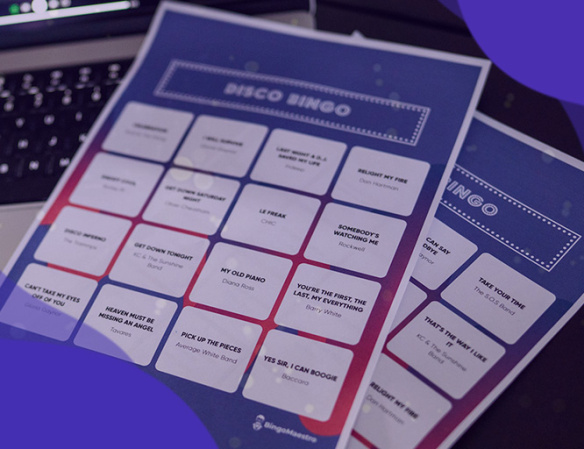
Every player receives a Singo card — a grid filled with song titles instead of numbers
A host plays short clips (15–30 seconds) from a curated playlist
When a player recognizes a song on their card, they mark it off
The first to complete a row, two rows, or a full card calls out "Singo!"
The host verifies the card and that player wins the round
That's it. No complex rules. No equipment beyond a speaker and a playlist. It's one of the most accessible party games around.
Singo vs. Regular Bingo: What's the Difference?
The biggest difference is the energy in the room. With regular bingo, people silently scan their cards. With Singo, people hum along, sing under their breath, and debate whether that was really a 2003 hit or a 2005 one. It creates a completely different social dynamic.
Why Is Singo So Popular?
Singo has become a hit across the U.S. and internationally for several good reasons:
It’s easy to learn – No complex rules or skills needed.
It’s social and engaging – Great for groups, teams, and icebreakers.
It appeals to all ages – You can customize the playlist for kids, teens, adults, or mixed-age events.
It’s incredibly flexible – Singo works at birthday parties, corporate events, fundraisers, pubs, school events, or even online via Zoom.
You can choose playlists based on genres (like 80s, 90s, pop, country, rock), or even themed Singo games like “Movie Soundtracks,” “TV Theme Songs,” or “Holiday Hits.”
What You Need to Play Singo
Singo has grown rapidly in bars, schools, offices, and living rooms for a few clear reasons:
It works for any age.
You can tailor the playlist to your crowd — 80s classics for a family reunion, current chart hits for a birthday, or Disney songs for a kids' party. The game adapts to whoever is playing.
It requires zero setup skills.
You don't need to be a quiz master or a DJ. A good playlist and a set of cards is all you need.
Music creates instant connection.
There's something about shared music that breaks the ice faster than almost anything else. Singo turns that into a competitive game, which makes it even more memorable.
It scales from 4 to 2000 players.
Whether you're hosting a small dinner party or a corporate event with 200 colleagues, the format works without modification.
What Kind of Events Is Singo Good For?
Singo fits almost any occasion where you want people engaged and having fun:
Birthday parties — especially milestone birthdays with themed playlists (all the hits from your birth year, for example)
Pub and bar nights — a structured game night that keeps people at their tables and ordering drinks
Corporate team-building — low-barrier, inclusive fun that works across departments and age groups
School events and fundraisers — adaptable to any age group, easy to manage in large spaces
Family gatherings — mix generations with multi-era playlists
Holiday parties — Christmas, Halloween, or New Year's editions are especially popular
Online events via Zoom or Teams — digital Singo works just as well as in-person
Can You Customize Singo?
Absolutely. One of Singo's biggest strengths is how easily it adapts to a theme or audience.
Popular playlist themes include:
Decade-based: 70s, 80s, 90s, 00s
Genre-based: pop, rock, R&B, country, Latin
Mood-based: feel-good hits, love songs, party anthems
Occasion-based: Christmas songs, summer hits, movie soundtracks
Artist-based: a full ABBA night, a Queen special, a Taylor Swift edition
The cards change to match the playlist — so the game always feels fresh and personal to the group playing it.
DIY Singo vs. Ready-Made Singo
You have two main options when it comes to playing Singo:
Build it yourself: Create your own playlist, design your own cards (in Word, Excel, or a card generator), print them, and host the game. This gives you full control but takes a few hours of preparation.
Use a ready-made package: Services like BingoMaestro offer complete Singo packages, professionally designed cards, a matched playlist, and a host guide — all ready to download and play within minutes.
For casual home use, DIY can be fun. For events, parties, or anything with more than 10 people, a ready-made package saves significant time and produces better results.
Frequently Asked Questions About Singo
Is Singo the same as music bingo?
Yes. Singo and music bingo refer to the same game. "Singo" is the branded name popularized in the US, while "music bingo" is the more common generic term used internationally. They work identically.
Do you need special equipment to play Singo?
No. You need a speaker, a device to play music from (phone, laptop, or tablet), a set of Singo cards, and something to mark the cards with (pens, chips, or tokens). That's all.
How long does a Singo game last?
A single round typically takes 15–25 minutes, depending on how quickly songs are recognized. Most events run two to four rounds back to back, making a full game night around 60–90 minutes.
How many players can play Singo?
Singo works with as few as 4 players and scales to groups of several hundred. Large events often split into tables, with a winner per table advancing to a final round.
Can children play Singo?
Yes, with an age-appropriate playlist. Kids' editions with nursery rhymes, Disney songs, or chart pop aimed at younger listeners work really well.
Ready to Play?
Want to know how the cards work? → Read about Singo Bingo Cards
Ready to set up your first game? → See how to host a Singo Bingo Game
Want a ready-to-play package? → Browse our Music Bingo games